Showing posts with label CCDC. Show all posts

Friday, June 17, 2016

Jefferson matters to everyone; not just cyclists


One misconception about closing Jefferson is that it's only about bikes. St. Luke's and their surrogates have promoted this idea, suggesting that a 'cycle track' can mitigate the lost connection.

But that's not the case.

Currently, Jefferson is the only direct, low-speed connection between everything to the east of Avenue B and Boise's downtown and West End.


The only one.

Jefferson is currently used by commuters who drive, bike, or walk to and from work or downtown businesses. That direct connectivity touches every commuter: the parent driving a child to school, the pedestrian or wheelchair user attempting to negotiate the busy intersections, etc.

Cars can't use a cycle track, and neither can pedestrians—or wheelchair users. That's why they call them 'cycle' tracks.

A classic example of the Jefferson user is a gentleman who went out of his way to talk with us during our 'person-on-the-street interviews' on Jefferson. The 38-second clip speaks to the many daily users whose voices haven't been heard over the din of P.R.


Pretending you can replace that last direct connection (for all modes of travel) with a 'cycle track' is like saying we can 'mitigate' for killing the last white rhino by substituting a whitewashed pig.


Use the quick and easy survey to tell ACHD Commissioners that keeping Jefferson public serves the public good and maintains safety for all commuters.
Connectivity in and of itself also represents a tangible and sought-after asset for urban planners and community developers, and it determines whether a place feels safe, accommodating and unified or unwelcoming and isolating. Building a megastructure over Jefferson would create a fortress that isolates neighborhoods and commerce.

Many feel the problem all along is that St. Luke’s has not truly explored options that do NOT assume closure of Jefferson. As Professor Allison pointed out early on in his testimony to the Mayor and Council, their master plan seems designed to support a foregone conclusion.

https://www.youtube.com/watch?v=NF5R5P9Ekx8 (min. 2:03)

As Mayor Bieter* pointed out, St Luke's has a poor track record of respectfully engaging and compromising with citizens who think differently or challenge their views. Some think their arrogance and unwillingness to truly cooperate will only strengthen once they get the go ahead on Jefferson.
*"...St. Luke’s seemed to me to be somewhat dismissive of the legitimate concerns of your neighbors...to quote one such supporter, dismissing those concerns as “insignificant noise.” I am an East Ender, too, and that’s a troubling statement." —Boise Mayor Dave Bieter, 6/30/2015
Coincidentally, below is a comment received via our online survey from an Ada County resident (not a KBC member):
"Before Jefferson can be vacated, there must be a revised overall transportation plan for the entire near East End — the area from Fort & Washington to 6th & Myrtle to the W Park Center bridge—a pinch-point for all travel east of downtown on the north side of the river. Current plans do not account for a major medical campus in the center of this transportation nexus."
This is a key point: ACHD also plans to convert Jefferson to a two-way route in the near term, a change that should be evaluated before committing to street closure along the route

Here's a thoughtful letter sent to ACHD recently from a local physician:
Dear Commissioners:
I am writing to oppose St. Luke's request to close Jefferson St.

St. Luke's has the wherewithal to find alternatives to its current plan which will further impede traffic through the East End and degrade the surrounding neighborhoods. Tunnels, skybridges and a shift in expansion to the south incorporating the existing parking garage are all possibilities.

More importantly, as a regional medical center, St. Luke's needs to align its expansion with the needs of the greater Treasure Valley and southwest Idaho. Clearly the population center of the Treasure Valley has progressively shifted westward, a trend that will undoubtedly continue. St. Luke's Meridian campus is ideally situated to accommodate future growth; its ER is already the busiest on the state. It's time that St. Luke's acknowledge that its flagship hospital will ultimately need to be in Meridian rather than hemmed in between a residential neighborhood and downtown Boise.

St. Luke's Boise provides an invaluable service to the community, however their growth has over the years had a negative impact on the surrounding neighborhoods. The time has come to draw the line at Jefferson St. and redirect St. Luke's future growth to the Meridian campus.

Thank you for your consideration.

Regards,

Peter Angleton, M.D. 

Use the quick and easy survey to tell ACHD Commissioners that keeping Jefferson public serves the public good and maintains safety for all commuters.

Tuesday, June 30, 2015

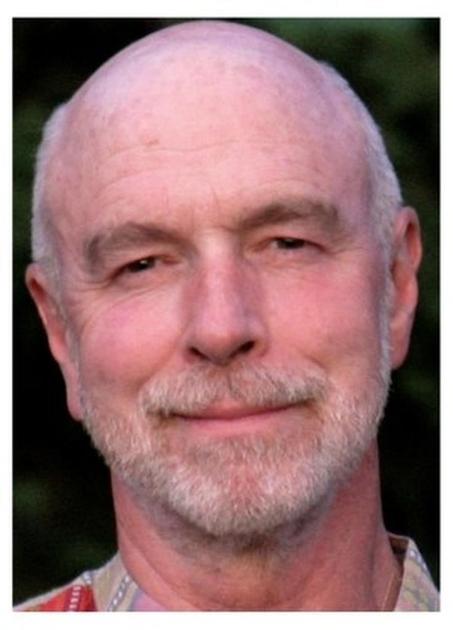
KBC Welcomes Professor David Allison, FAIA, FACHA

David Allison, FAIA, FACHA
KBC members and supporters are honored to welcome special guest Professor David Allison, FAIA, FACHA—the Alumni Distinguished Professor and Director of Graduate Studies in Architecture + Health at Clemson University.
Thanks to his interest in Boise's challenges after reviewing St. Luke's Master Plan, contributions from neighbors—and a little serendipity—we're happy to have one of America's most-respected educators and practitioners in the field of health care architecture.
We all want Boise to live up to Mayor Bieter's goal of 'America's Most Livable City,' so we thought, "why not bring in the architect voted 'one of the most influential people in healthcare design' in multiple yearly polls?" (source: Healthcare Design Magazine)
We took Professor Allison on a pedestrian tour of St. Luke's campus to give him an up-close sense of the current layout and proposed changes to compare with the proposed master plan. In the spirit of cooperation and fairness, KBC even lined up time the morning of the City Council hearing for Professor Allison to meet with some of the key folks from St. Luke's design team.
He will be presenting his thoughts on health district design in general, with a few observations of the proposed St. Luke's plan to City Council this evening. See the attached press release for more details.

6/28/15 Release available here. (Features bio for KBC Guest Prof. David Allison)

Former ACHD Commissioner speaks out

Kudos to the Statesman for publishing a contrasting voice to their own unsigned editorial.

Guest Opinion: St. Luke’s should reconsider expansion and use South option

Read more here: http://www.idahostatesman.com/2015/06/29/3875070/guest-opinion-st-lukes-should.html#storylink=cpy
Gary Richardson
St. Luke’s alternatives analysis for its master plan is incomplete, misleading, unconvincing and somewhat disingenuous. At least one other alternative exists that would meet emergency and other service criteria without closing Jefferson Street:

A southward expansion, replacing or built over the existing parking garage, meets the horizontal-service, connectivity and continuum-of-care objectives of the hospital’s proposed northward expansion.

It also obviates the need to take two more blocks of public right-of-way beyond that already vacated on Bannock and Avenue A.

Most of the hospital’s objections to expanding southward relate to placing the medical office building and parking garage eastward, across Avenue B. (St. Luke’s doesn’t own much of that land.) However, there is a way to keep those facilities north of Jefferson:

Expand southward, connecting the main expansion to existing hospital floors and corridors as desired.

Relegate parking, central plant, shipping and receiving facilities to the Front/First/Jefferson “island,” where they are more accessible to thoroughfares and farther from residential areas.

Locate the office building across Jefferson from the existing medical “plaza,” which can expand to the west as shown and/or provide additional parking.

The new facilities can easily be connected to the main buildings across Jefferson — underground, overhead or both.

The hospital also criticized southward expansion because it would move the main entrance and emergency department: “Expansion to the south causes redevelopment of the entire front of the existing hospital. Patient and visitor access to front door is problematic.” However, St. Luke’s preferred, northward expansion envisions just that: redeveloping the entire front of the hospital by moving the main entrance to the Fort Street side of the expansion.

Southward expansion offers several workable options for locating the new entrance and the emergency department without vacating Jefferson. There are two emergency options: a grand entrance at the corner of Jefferson and Avenue B (or farther west on Jefferson); or an entrance on Avenue B across from East Bannock.

Other St. Luke’s objections to the southward expansion were not stated in the plan but came up in discussions: The inconvenience of closing the hospital’s main entrance during construction, and the additional cost of dealing with the existing parking structure. These objections are not insurmountable.

Alternate entrances can be provided during construction — a temporary inconvenience, which should be weighed against the permanent inconvenience to the public of disregarding the important connectivity built into the city’s comprehensive plan.

The possibility that the garage location could block optimal expansion alternatives should have been considered before the hospital built it; the public should not pay for the hospital’s shortsightedness.

Most troubling is the high-handed way St. Luke’s has approached its proposed master plan. Apparently its administrators haven’t heard of strategic development of informed consent.

This entails identifying at early planning stages everyone who might be affected by a proposed action and involving them deeply in the decision-making process so they have all the information upon which the ultimate decisions are based.

While they may not agree with the ultimate outcome, having been heard and understanding how costs and benefits were weighed, they are more likely to assent.

More importantly, these stakeholders actually may contribute to a better decision.

St. Luke’s “my way or the highway” attitude has turned out to be a two-way street. It has generated sentiment that perhaps St. Luke’s should move some of its services to the population center of the Treasure Valley: Meridian.

The city should send St. Luke’s back to work with their neighbors — with a copy of the city’s comprehensive plan — to guide them toward better integrating health services with neighborhood needs.

Gary E Richardson is a former Ada County Highway District commissioner (1997-98) who has lived in the St. Luke’s neighborhood for more than 30 years.


See the full Guest Opinion here.

Read more about Gary Richardson here.


Read more here: http://www.idahostatesman.com/2015/06/29/3875070/guest-opinion-st-lukes-should.html#storylink=cpy

Sunday, June 28, 2015

KBC community meeting on proposed St. Luke's expansion

Residents packed the Fort Boise Senior Center Wednesday evening to participate in a frank and open exploration of the proposed St. Luke's master plan. The emphasis was on understanding likely impacts and presenting/analyzing alternatives that would allow for expanded health care services in Boise while preserving the community and neighborhood values reflected in Blueprint Boise.

As always, we encourage careful review and consideration of all available materials on the topic. Our goal is an informed and inclusive decision-making process that supports the entire community, and keeps Boise connected physically, socially and culturally. We want a livable city that contributes to the health, safety and prosperity of all citizens.


Introduction/overview


Traffic


Alternatives Analysis


Getting Involved


Questions and Answers


Thursday, June 25, 2015

KBC Community Meeting

A simple update from last night's standing-room-only community meeting hosted by KBC members. The room was packed, the conversation lively and engaged.

See coverage of the meeting:

Citizens host workshop on St. Luke's plan (KTVB)

Neighbors pitch alternative ideas on St. Luke's expansion plans (KBOI)


Comments from someone who showed up out of curiosity sum it up well:
"you guys hit it out of the park! Speakers were passionate yet humble and not at all preachy.  The dots were masterfully connected and the concept of a health district and the rationale behind it were compelling."  
We hear that pretty often these days, and the support is greatly appreciated. Our aim is to present available facts and reasonable conclusions without fluff or distractions, because Boise citizens are smart enough to see through spin and draw their own conclusions.

Some in the audience wished a representative from the Mayor's office or City Council had been in attendance. We know they have busy schedules these days; we also think they would benefit greatly from a second opinion and hearing a more citizen-oriented conversation along with more robust alternatives analysis. 

We're all stakeholders in this process, and we all support Mayor Bieter's goal of making Boise the most livable city in America; we just can't get there relying on old thinking.

We were able to document the entire meeting and will share the video with City leaders.

See the videos below for additional information and alternatives. 


Wednesday, June 17, 2015

Build where the people and access are...

Every land-use and transportation expert we talk with has a question: with the largest population growth projected between Boise and the Oregon border, why not build a 'regional medical center' in the center of the region? When they look at the proposed expansion location we hear the same thing: 'with the negative impacts and limitations of the current site, why would anyone imagine this is an acceptable location and policy?'

Why indeed?

Economists tell us that the scale of a regional medical center means economic impacts will be felt throughout the region. Whether St. Luke's expands in Boise or Meridian, new hires (just like current employees) will live throughout the region, drawn to housing that is affordable based on their wages.

Transportation and land-use professionals know that distributing traffic loads throughout the region (or even spreading that load to different parts of Boise) would reduce or in some cases eliminate the need for complex and costly new transportation infrastructure.

To them, the East End location defies logic and best practices. Many in Boise agree.

Where else might Boise find available land with freeway access and opportunities for redevelopment?

Here's one of many alternatives in Boise: https://vimeo.com/129050335


Tuesday, February 3, 2015

Boise, Idaho Downtown Walkability Analysis (10/13)

Boise's Capital City Development Corporation (CCDC) worked with walkability expert Jeff Speck to create a walkability study and report for Boise's amazing downtown. The following is a direct quote from the study:

"Downtown Boise benefits from a quite small block size—about 300 feet square—and almost none of these blocks have been consolidated into superblocks, which tend to decrease walkability by focusing traffic on fewer streets, causing them to become too wide. The logic of small blocks suggests that no further block consolidations should be allowed, such as the one currently considered at St. Luke’s, which will significantly undermine the effectiveness of the street grid in that location." (emphasis KBC)
See the whole study here.