Showing posts with label Gary Richardson. Show all posts

Tuesday, June 21, 2016

Mixed Messages

 “News is what someone wants suppressed. Everything else is advertising.”

 — Katharine Graham, Publisher of The Washington Post during the Watergate scandal

The following was submitted by a Boise business leader:
Monday June 20, Boise resident Bob Kaiser submitted the following letter to the editorial board at the Idaho Statesman.  The letter challenges the editorial board's published opinion that all of the proposed St Luke's expansion's medical office buildings (nearly half of the project) should be located on their downtown hospital campus, to provide proximity and convenience. Ironically, this position directly contradicts the newspaper's own reporting by its health care business reporter, who has won national and state awards for her reporting on health care and public affairs. 

Here is the rebuttal letter:

Dear Statesman editorial board:  

I would like to introduce you to newspaper reporter Audrey Dutton.  Audrey is an award winning Healthcare reporter for the Idaho Statesman, your very own newspaper. Over the last 4 years, Audrey's in-depth healthcare articles have educated many readers in Southwestern Idaho about the reasons behind the high cost of healthcare.

In Sunday's editorial regarding St Luke's expansion, you wrote, "Though some have suggested that the St. Luke’s plan includes an inordinate number of medical office buildings that could be located elsewhere in the city, we don’t buy that. To the contrary, we feel the proximity and convenience in the new plans serve patients trying to get well." 

Yet, in one of Audrey’s articles printed in the Statesman on October 28, 2012 she summarized, "HOSPITAL-BASED = HIGHER CHARGES" and in that article she went on to detail why that is the case.  Per your own newspaper's investigative reporting it has been shown that outpatient visits, procedures, labs, imaging, all cost significantly more when delivered on a hospital campus. 

The question I’d like to ask the editorial board is this; do you read your own newspaper reporting or just the corporate press releases and paid advertising?

Bob Kaiser, Boise

The proposed St Luke's expansion includes nearly 300,000 square feet of medical office buildings, which includes outpatient services and doctor offices. In many cases, outpatient doctors do not provide inpatient care, which is typically handled by a hospitalist. All three Medical Office Buildings and associated parking could be easily built on St Luke's 5.6 acre downtown Boise property on Fairview Avenue, between 25th and 27th Street, or their Americana property or their Meridian Campus. A new medical office building complex could provide outpatient visits, procedures, labs, imaging, and offer affordable off-campus healthcare with proximity and convenience.

If the proposed St Luke's expansion were completed, it would have nearly 100,000 square feet more space in just Medical Office Buildings than the entire square footage of the St Luke's Meridian Campus.

In an October 30, 2015 IdahoStatesman article, Audrey wrote about a cancer patient's out-of-pocket costs increasing 490 percent after her doctor joined St. Luke's.

"When a cancer patient wrote an email to St. Luke’s CEO David Pate saying her costs for blood work spiked from $40 to $236 after her doctor joined St. Luke’s, she prompted a string of emails among St. Luke’s employees and leaders.

Her blood work was suddenly billed as occurring in a hospital, and her insurance plan wouldn’t cover that, leaving her with the full charge."

Middle-class families are experiencing rising healthcare costs first-hand through ever increasing employee contributions, larger deductibles, and co-pays.

Given a choice, most Treasure Valley residents would choose affordable healthcare that is closer to the county's population center over the hardship of surprise hospital-based blood work costs that may increase 490 percent and having to cover the cost themselves because their health insurance does not.

Keep Boise Connected, Inc. has never been against better or more convenient health care.  What we have opposed is the taking of our public streets for the primary purpose of generating more profit for a supposed not-for-profit entity, particularly when there appear to be obvious and better options for the community.  It doesn't help when the very institutions that are supposed to act as a safeguard on the public's behalf, namely our government and our local press, have seemingly "sold out" on their responsibilities.


Public Isn't Served by More Street Closures

What do independent thinkers have to say? 

Read the comments below, then let ACHD Commissioners know what you think about diverting their time and resources from pressing infrastructure needs throughout Ada County. Tellus@achdidaho.org

St. Luke's has been pouring money into local nonprofits, political campaigns and heavy rotation media buys, with predictable results. These funds come out of the pockets of patients, public and private insurers, and taxpayers.

But there are still many Ada County residents and independent experts whose endorsements aren't for sale—at any price. They speak out not for personal or political gain, but because they believe citizens and taxpayers—not private corporations—should have a say in the future of our community.


"St. Luke's Boise provides an invaluable service to the community, however their growth has over the years had a negative impact on the surrounding neighborhoods. The time has come to draw the line at Jefferson St. and redirect St. Luke's future growth to the Meridian campus."
—Peter Angleton, M.D.

"Most troubling is the high-handed way St. Luke’s has approached its proposed master plan. Apparently its administrators haven’t heard of strategic development of informed consent."
—Gary Richardson, Former ACHD Commissioner


"Citizens who devote substantial time and effort to work within the system only to see its requirements for honest, constructive give-and-take ignored by policy makers will be disillusioned and unlikely to use this avenue again. The consequences of citizen disengagement are subtle but ultimately devastating to creating the "livable city" our leaders say they want."

—Diane Ronayne, Former Boise P&Z Commissioner


“Hospitals have this implied mission of ‘do no harm’…but by fundamentally creating a superblock in a choke point in your city, they (St. Luke’s) are in fact, harming the city...I think a cycle track is a great exercise amenity...it's not necessarily about connectivity and healthy community planning and design."
 —David Allison, FAIA, FACHA—Alumni Distinguished Professor and Director of Graduate Studies in Architecture + Health at Clemson University

"For community health, it benefits all to have a safe route of access to downtown, whether on bike, foot, or car. Jefferson Street is the safest route for a child, commuter or family to access downtown. The solution to growth is reconfiguration, avoiding duplication of services (leave the trauma care to St. Al's), adequate staffing, and reduction of costly executive and managerial positions."

—Dr. Ann Cordum, Internal Medicine Physician

"…there is absolutely no way I could advocate for, or be in favor of shutting down Jefferson St. It really boils down to safety and connectivity, and the closing of Jefferson presents significant problems to both of these."*

 Jimmy Halyburton, Boise Bicycle Project (League-Certified Bicycle Safety Instructor, Participant in St. Luke’s Cycle Discussion) 
^ Update 6/23/16: apparently, there was a way he could advocate for shutting down Jefferson, since he reversed this position and endorsed St. Luke's application at the crucial ACHD hearing; although nothing had changed re: safety or connectivity.

"The logic of small blocks suggests that no further block consolidations should be allowed, such as the one currently considered at St. Luke’s, which will significantly undermine the effectiveness of the street grid in that location.” 
 —Jeff Speck, AICP, CNU-A, LEED-AP; Author, 'Walkable City: How Downtown Can Save America, One Step at a Time'


Tuesday, June 30, 2015

Former ACHD Commissioner speaks out

Kudos to the Statesman for publishing a contrasting voice to their own unsigned editorial.

Guest Opinion: St. Luke’s should reconsider expansion and use South option

Read more here: http://www.idahostatesman.com/2015/06/29/3875070/guest-opinion-st-lukes-should.html#storylink=cpy
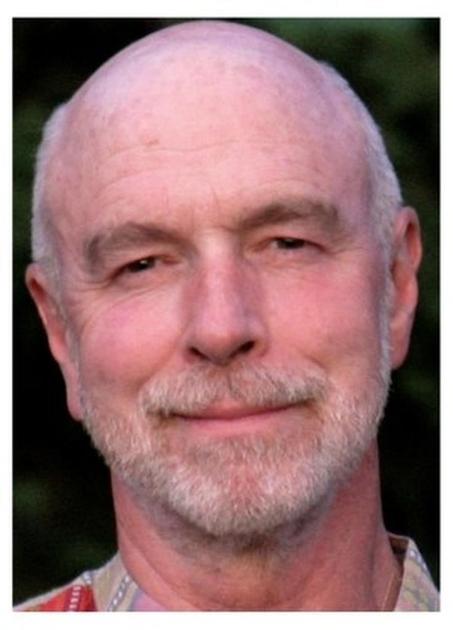
Gary Richardson
St. Luke’s alternatives analysis for its master plan is incomplete, misleading, unconvincing and somewhat disingenuous. At least one other alternative exists that would meet emergency and other service criteria without closing Jefferson Street:

A southward expansion, replacing or built over the existing parking garage, meets the horizontal-service, connectivity and continuum-of-care objectives of the hospital’s proposed northward expansion.

It also obviates the need to take two more blocks of public right-of-way beyond that already vacated on Bannock and Avenue A.

Most of the hospital’s objections to expanding southward relate to placing the medical office building and parking garage eastward, across Avenue B. (St. Luke’s doesn’t own much of that land.) However, there is a way to keep those facilities north of Jefferson:

Expand southward, connecting the main expansion to existing hospital floors and corridors as desired.

Relegate parking, central plant, shipping and receiving facilities to the Front/First/Jefferson “island,” where they are more accessible to thoroughfares and farther from residential areas.

Locate the office building across Jefferson from the existing medical “plaza,” which can expand to the west as shown and/or provide additional parking.

The new facilities can easily be connected to the main buildings across Jefferson — underground, overhead or both.

The hospital also criticized southward expansion because it would move the main entrance and emergency department: “Expansion to the south causes redevelopment of the entire front of the existing hospital. Patient and visitor access to front door is problematic.” However, St. Luke’s preferred, northward expansion envisions just that: redeveloping the entire front of the hospital by moving the main entrance to the Fort Street side of the expansion.

Southward expansion offers several workable options for locating the new entrance and the emergency department without vacating Jefferson. There are two emergency options: a grand entrance at the corner of Jefferson and Avenue B (or farther west on Jefferson); or an entrance on Avenue B across from East Bannock.

Other St. Luke’s objections to the southward expansion were not stated in the plan but came up in discussions: The inconvenience of closing the hospital’s main entrance during construction, and the additional cost of dealing with the existing parking structure. These objections are not insurmountable.

Alternate entrances can be provided during construction — a temporary inconvenience, which should be weighed against the permanent inconvenience to the public of disregarding the important connectivity built into the city’s comprehensive plan.

The possibility that the garage location could block optimal expansion alternatives should have been considered before the hospital built it; the public should not pay for the hospital’s shortsightedness.

Most troubling is the high-handed way St. Luke’s has approached its proposed master plan. Apparently its administrators haven’t heard of strategic development of informed consent.

This entails identifying at early planning stages everyone who might be affected by a proposed action and involving them deeply in the decision-making process so they have all the information upon which the ultimate decisions are based.

While they may not agree with the ultimate outcome, having been heard and understanding how costs and benefits were weighed, they are more likely to assent.

More importantly, these stakeholders actually may contribute to a better decision.

St. Luke’s “my way or the highway” attitude has turned out to be a two-way street. It has generated sentiment that perhaps St. Luke’s should move some of its services to the population center of the Treasure Valley: Meridian.

The city should send St. Luke’s back to work with their neighbors — with a copy of the city’s comprehensive plan — to guide them toward better integrating health services with neighborhood needs.

Gary E Richardson is a former Ada County Highway District commissioner (1997-98) who has lived in the St. Luke’s neighborhood for more than 30 years.


See the full Guest Opinion here.

Read more about Gary Richardson here.


Read more here: http://www.idahostatesman.com/2015/06/29/3875070/guest-opinion-st-lukes-should.html#storylink=cpy