Showing posts with label East End Neighborhood Association. Show all posts

Tuesday, June 30, 2015

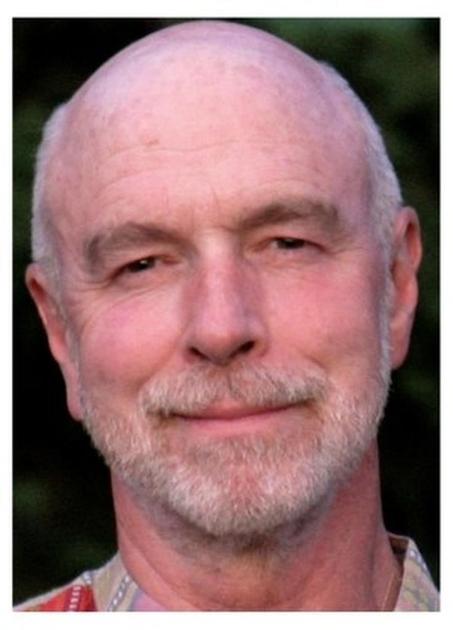
KBC Welcomes Professor David Allison, FAIA, FACHA

David Allison, FAIA, FACHA
KBC members and supporters are honored to welcome special guest Professor David Allison, FAIA, FACHA—the Alumni Distinguished Professor and Director of Graduate Studies in Architecture + Health at Clemson University.
Thanks to his interest in Boise's challenges after reviewing St. Luke's Master Plan, contributions from neighbors—and a little serendipity—we're happy to have one of America's most-respected educators and practitioners in the field of health care architecture.
We all want Boise to live up to Mayor Bieter's goal of 'America's Most Livable City,' so we thought, "why not bring in the architect voted 'one of the most influential people in healthcare design' in multiple yearly polls?" (source: Healthcare Design Magazine)
We took Professor Allison on a pedestrian tour of St. Luke's campus to give him an up-close sense of the current layout and proposed changes to compare with the proposed master plan. In the spirit of cooperation and fairness, KBC even lined up time the morning of the City Council hearing for Professor Allison to meet with some of the key folks from St. Luke's design team.
He will be presenting his thoughts on health district design in general, with a few observations of the proposed St. Luke's plan to City Council this evening. See the attached press release for more details.

6/28/15 Release available here. (Features bio for KBC Guest Prof. David Allison)

Former ACHD Commissioner speaks out

Kudos to the Statesman for publishing a contrasting voice to their own unsigned editorial.

Guest Opinion: St. Luke’s should reconsider expansion and use South option

Read more here: http://www.idahostatesman.com/2015/06/29/3875070/guest-opinion-st-lukes-should.html#storylink=cpy
Gary Richardson
St. Luke’s alternatives analysis for its master plan is incomplete, misleading, unconvincing and somewhat disingenuous. At least one other alternative exists that would meet emergency and other service criteria without closing Jefferson Street:

A southward expansion, replacing or built over the existing parking garage, meets the horizontal-service, connectivity and continuum-of-care objectives of the hospital’s proposed northward expansion.

It also obviates the need to take two more blocks of public right-of-way beyond that already vacated on Bannock and Avenue A.

Most of the hospital’s objections to expanding southward relate to placing the medical office building and parking garage eastward, across Avenue B. (St. Luke’s doesn’t own much of that land.) However, there is a way to keep those facilities north of Jefferson:

Expand southward, connecting the main expansion to existing hospital floors and corridors as desired.

Relegate parking, central plant, shipping and receiving facilities to the Front/First/Jefferson “island,” where they are more accessible to thoroughfares and farther from residential areas.

Locate the office building across Jefferson from the existing medical “plaza,” which can expand to the west as shown and/or provide additional parking.

The new facilities can easily be connected to the main buildings across Jefferson — underground, overhead or both.

The hospital also criticized southward expansion because it would move the main entrance and emergency department: “Expansion to the south causes redevelopment of the entire front of the existing hospital. Patient and visitor access to front door is problematic.” However, St. Luke’s preferred, northward expansion envisions just that: redeveloping the entire front of the hospital by moving the main entrance to the Fort Street side of the expansion.

Southward expansion offers several workable options for locating the new entrance and the emergency department without vacating Jefferson. There are two emergency options: a grand entrance at the corner of Jefferson and Avenue B (or farther west on Jefferson); or an entrance on Avenue B across from East Bannock.

Other St. Luke’s objections to the southward expansion were not stated in the plan but came up in discussions: The inconvenience of closing the hospital’s main entrance during construction, and the additional cost of dealing with the existing parking structure. These objections are not insurmountable.

Alternate entrances can be provided during construction — a temporary inconvenience, which should be weighed against the permanent inconvenience to the public of disregarding the important connectivity built into the city’s comprehensive plan.

The possibility that the garage location could block optimal expansion alternatives should have been considered before the hospital built it; the public should not pay for the hospital’s shortsightedness.

Most troubling is the high-handed way St. Luke’s has approached its proposed master plan. Apparently its administrators haven’t heard of strategic development of informed consent.

This entails identifying at early planning stages everyone who might be affected by a proposed action and involving them deeply in the decision-making process so they have all the information upon which the ultimate decisions are based.

While they may not agree with the ultimate outcome, having been heard and understanding how costs and benefits were weighed, they are more likely to assent.

More importantly, these stakeholders actually may contribute to a better decision.

St. Luke’s “my way or the highway” attitude has turned out to be a two-way street. It has generated sentiment that perhaps St. Luke’s should move some of its services to the population center of the Treasure Valley: Meridian.

The city should send St. Luke’s back to work with their neighbors — with a copy of the city’s comprehensive plan — to guide them toward better integrating health services with neighborhood needs.

Gary E Richardson is a former Ada County Highway District commissioner (1997-98) who has lived in the St. Luke’s neighborhood for more than 30 years.


See the full Guest Opinion here.

Read more about Gary Richardson here.


Read more here: http://www.idahostatesman.com/2015/06/29/3875070/guest-opinion-st-lukes-should.html#storylink=cpy

Context and commentary from one of Boise's most respected citizen leaders

Diane Ronayne
Tonight at 5 p.m. the City Council considers St. Luke's expansion plan. Some 20 years ago, a bunch of us got together and formed the Neighborhood Alliance, which with the city's support nurtured into being dozens of neighborhood associations throughout Boise. Our purpose was to give citizens equal legal footing in the development processes that affected the value of their property and quality of their lives. I'm very proud of the way East Enders have responded to St. Luke's proposal through their neighborhood association and the ad hoc nonprofit Keep Boise Connected, Inc.

Unfortunately, the constructive give-and-take between applicant and neighbors that we worked so hard to codify in the city's planning process did not occur with this project. The applicant's attitude when making its mandatory presentation to EENA was non-negotiable in any substantial way.

If the council chooses to ignore this flawed process AND the recommendation of their own Planning and Zoning Commission to reject the proposal because it does not meet the requirements of the city’s comprehensive plan, they will set a dangerous precedent. Citizens who devote substantial time and effort to work within the system only to see its requirements for honest, constructive give-and-take ignored by policy-makers will be disillusioned and unlikely to use this avenue again. The consequences of citizen disengagement are subtle but ultimately devastating to creating the "livable city" our leaders say they want.

The council only needs to uphold the P&Z recommendation to deny this master plan application and send it back to the applicant with instructions to alter it to meet the requirements of our comprehensive plan. This project will dramatically alter the east end of downtown, cut off a neighborhood, and add thousands of vehicles to already congested intersections over 30 years. We can afford to take another six months to find an alternative with fewer negative consequences. One suggestion: Bring ACHD and Valley Ride into the process meaningfully NOW, so the parties can include mass transit/park-and-ride as part of the "moving people not cars" equation.

See more on Dian Ronayne here.

A Local Physician's Perspective

Ann CordumKeep Boise Connected, Inc.

St. Luke’s provides excellent care and top-notch expertise. Hospital executives argue that expansion is necessary because in emergencies, seconds matter. Closure of Jefferson Street would connect emergency services to interventional radiology and save lives.
What save lives are the following: adequate staffing on the front lines of patient care, clinician competence, well-designed processes, and effective communication across the care team. Physical space does not save lives. The larger an organization, the more logistical challenges, and the greater the delays in care. Physical grandeur and proximity do not equal better care. In fact, studies show that patients who have a stroke while in the hospital suffer long delays in getting thrombolysis and life-saving care. Larger facilities are also typically associated with greater overhead which translates into higher costs that are ultimately passed on to us all. Outpatient care costs are substantially higher at a hospital than at a physician’s office.
Only a tiny minority of emergency room patients need interventional radiology. Most hospital admissions are for infections, congestive heart failure, drug overdoses, emphysema, blood clots, surgical issues, and the like. What good is it to whisk someone away for intervention while Mrs. Jones lies on a gurney for hours awaiting admission for her pneumonia? The reality is that cardiac and stroke patients are outnumbered by general medical/surgical patients who often sit in emergency rooms for hours awaiting admission and higher level care. Their lives are every bit as important as the stroke patient’s.
I would ask our community: Has access to your physician improved as a result of expansion, i.e. by hospital acquisition of local physician groups? Did the quality of your health care improve? Has it become more cost effective? Would you prefer to navigate a larger hospital campus?
St. Luke's has a large enough footprint to reconfigure on its existing acreages without closing tax payer owned roads and encroaching on historic properties to expand intersections and roadways. Options include building upward from the existing hospital parking lot or relocating outpatient services to its other Boise properties. This would leave plenty of room at the existing downtown campus for inpatient services and future growth.
For community health, it benefits all to have a safe route of access to downtown, whether on bike, foot, or car. Jefferson Street is the safest route for a child, commuter or family to access downtown.
The solution to growth is reconfiguration, avoiding duplication of services (leave the trauma care to St. Al's), adequate staffing, and reduction of costly executive and managerial positions.
In conclusion, while I am thankful to have St. Luke’s in my neighborhood, there are better ways to spend $400 million improving heath care in Boise than the proposed campus expansion.
Ann Cordum
East End resident
Internal medicine physician

Wednesday, June 17, 2015

Build where the people and access are...

Every land-use and transportation expert we talk with has a question: with the largest population growth projected between Boise and the Oregon border, why not build a 'regional medical center' in the center of the region? When they look at the proposed expansion location we hear the same thing: 'with the negative impacts and limitations of the current site, why would anyone imagine this is an acceptable location and policy?'

Why indeed?

Economists tell us that the scale of a regional medical center means economic impacts will be felt throughout the region. Whether St. Luke's expands in Boise or Meridian, new hires (just like current employees) will live throughout the region, drawn to housing that is affordable based on their wages.

Transportation and land-use professionals know that distributing traffic loads throughout the region (or even spreading that load to different parts of Boise) would reduce or in some cases eliminate the need for complex and costly new transportation infrastructure.

To them, the East End location defies logic and best practices. Many in Boise agree.

Where else might Boise find available land with freeway access and opportunities for redevelopment?

Here's one of many alternatives in Boise: https://vimeo.com/129050335